
Understanding Tomato Paste Products
Tomato paste is one of the most widely traded food ingredients worldwide. It serves as a key component in sauces, soups, ready meals, ketchup production, and numerous food manufacturing processes.
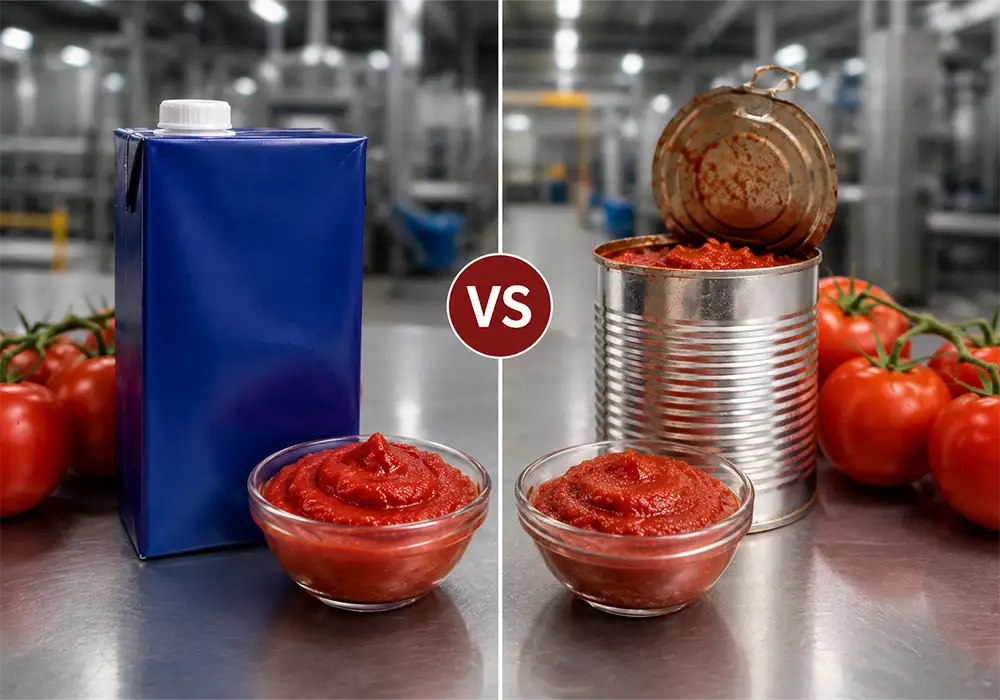
Today, buyers generally choose between two major product categories:
- Aseptic Tomato Paste
- Conventional Tomato Paste
Both products offer excellent flavor, color, and nutritional value, but they are designed for different business needs and supply chains.
What Is Aseptic Tomato Paste?
Aseptic Tomato Paste is produced by processing fresh tomatoes into concentrated paste and packaging the product in sterile conditions.
The aseptic process prevents contamination while preserving product quality over an extended period.
Because of its packaging method, Aseptic Tomato Paste is commonly supplied in industrial formats such as:
- Aseptic bags
- Drums
- Large bulk containers
This makes it particularly suitable for food processing factories and industrial buyers.
Key Advantages of Aseptic Tomato Paste
Longer Shelf Life
One of the biggest advantages of Aseptic Tomato Paste is its ability to maintain quality over long storage periods.
This feature makes it ideal for international trade and large-scale inventory management.
Efficient Transportation
Bulk packaging reduces transportation costs per unit and improves logistics efficiency.
Ideal for Industrial Processing
Food manufacturers frequently use Aseptic Tomato Paste as a raw ingredient in:
- Ketchup production
- Pizza sauces
- Pasta sauces
- Ready meals
- Food processing operations
Reduced Packaging Waste
Industrial packaging formats generate less packaging waste compared to retail-oriented alternatives.
What Is Conventional Tomato Paste?
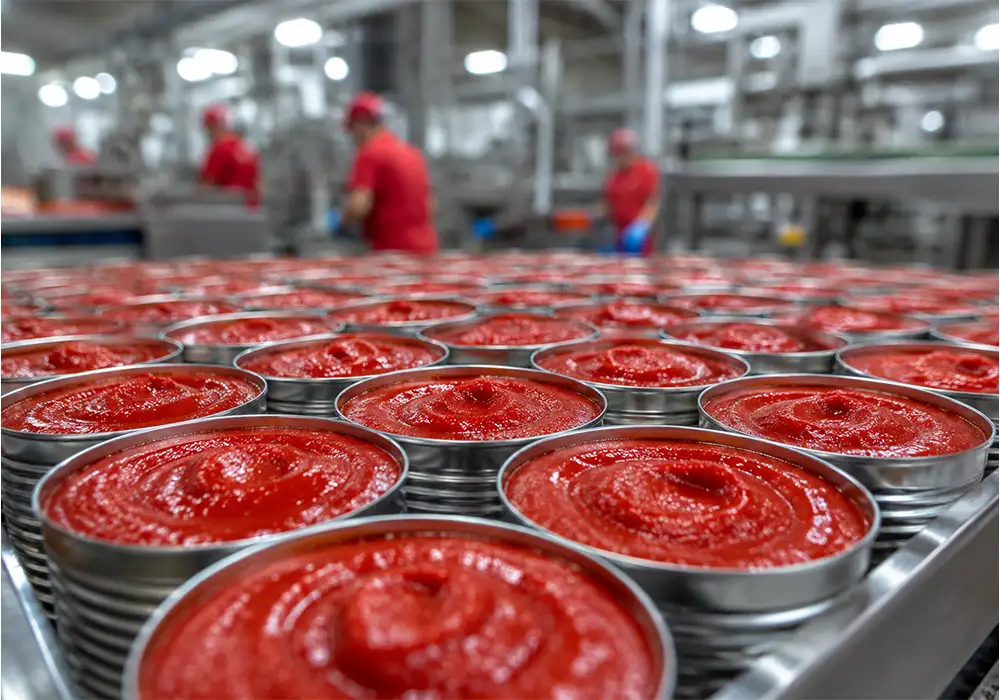
Conventional Tomato Paste is typically packaged in cans, jars, or retail containers and is intended for direct sale to consumers, restaurants, wholesalers, and retail stores.
It delivers the same rich tomato flavor and natural color but is designed for immediate market distribution rather than industrial processing.
Many importers select Conventional Tomato Paste because it can be sold directly without additional packaging requirements.
Key Advantages of Conventional Tomato Paste
Retail Ready
Products can be placed directly on supermarket shelves after import.
Consumer Convenience
Convenient packaging formats appeal to household consumers and food service operators.
Brand Visibility
Retail packaging allows distributors and retailers to strengthen their market presence through branding.
Broad Market Demand
Conventional Tomato Paste enjoys strong demand across supermarkets, grocery stores, restaurants, and catering businesses.
Comparing Aseptic Tomato Paste and Conventional Tomato Paste
Packaging
Aseptic Tomato Paste
- Bulk industrial packaging
- Aseptic bags
- Large drums
- Suitable for factories
Conventional Tomato Paste
- Metal cans
- Easy-open cans
- Retail packaging
- Ready for direct sale
Shelf Life
Aseptic Tomato Paste generally offers excellent shelf stability due to sterile processing and packaging methods.
Conventional Tomato Paste also provides a long shelf life but is typically designed for retail distribution channels.
Target Customers
Aseptic Tomato Paste
Best suited for:
- Food manufacturers
- Sauce producers
- Industrial processors
- Large-scale ingredient buyers
Conventional Tomato Paste
Best suited for:
- Importers
- Wholesalers
- Distributors
- Supermarkets
- Restaurants
- Retail chains
Logistics and Storage
Aseptic Tomato Paste is often preferred for large-volume shipments because its packaging format maximizes storage and transportation efficiency.
Conventional Tomato Paste requires more retail-focused handling but provides immediate market readiness.
Which Product Is Right for Importers?
The answer depends on your business model.
If your company supplies food factories or industrial processors, Aseptic Tomato Paste is often the most practical and cost-effective solution.
If your business serves supermarkets, retailers, wholesalers, or restaurants, Conventional Tomato Paste may offer greater flexibility and faster market access.
Many importers choose to source both products in order to serve multiple customer segments simultaneously.
Why Quality Consistency Matters
Regardless of product type, quality consistency remains one of the most important factors when selecting a supplier.
A professional Tomato Paste Manufacturer should ensure:
- Uniform color
- Consistent texture
- Stable concentration levels
- Reliable packaging quality
- Consistent product performance
For distributors and importers, maintaining quality across every shipment helps build customer trust and strengthen brand reputation.
Choosing the Right Tomato Paste Manufacturer
The success of your sourcing strategy depends heavily on selecting an experienced Tomato Paste Manufacturer.
Before placing an order, evaluate:
- Production capacity
- Quality control procedures
- Export experience
- Packaging flexibility
- Supply stability
- Customer support
A reliable manufacturer can help minimize supply chain risks while ensuring dependable product quality.
The Growing Global Demand for Tomato Paste
Global demand for tomato paste continues to grow due to increasing consumption of processed foods, ready meals, sauces, and convenience products.
This trend creates significant opportunities for importers, wholesalers, and distributors seeking dependable supply partners.
Businesses that work with experienced manufacturers are better positioned to meet market demand while maintaining competitive pricing and product quality.
Final Thoughts
Both Aseptic Tomato Paste and Conventional Tomato Paste offer valuable advantages depending on your business objectives.
Aseptic Tomato Paste is ideal for industrial processing and bulk applications, while Conventional Tomato Paste is better suited for retail distribution and food service markets.
By understanding the differences between these products and partnering with a trusted Tomato Paste Manufacturer, buyers can make informed decisions that support long-term growth and operational success.